
These statistics are compiled from the club (4U1A) log for all 9 years of the club’s existence. The statistics do not include 9 other callsigns that were used by the club in various events (such as 4U0IARU, 4UNR, 4U0R, 4U2U and etc…).
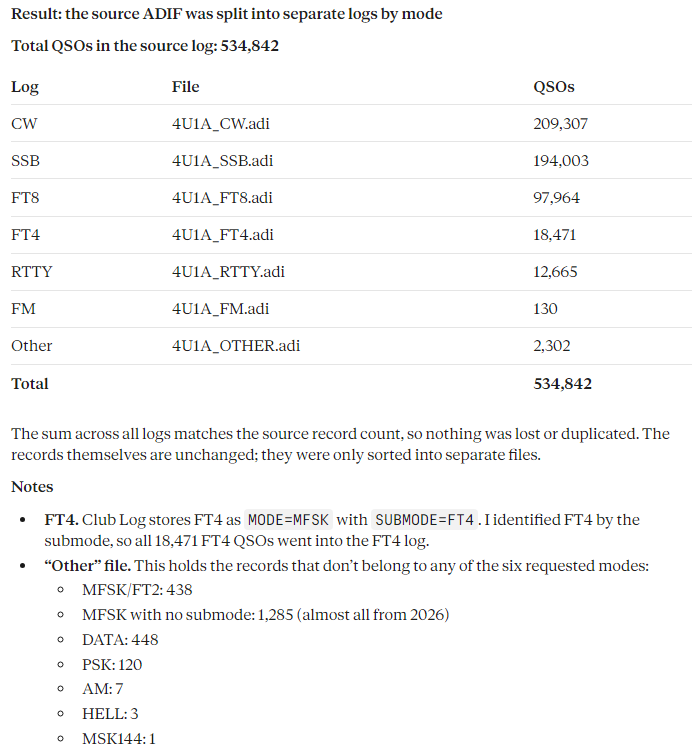
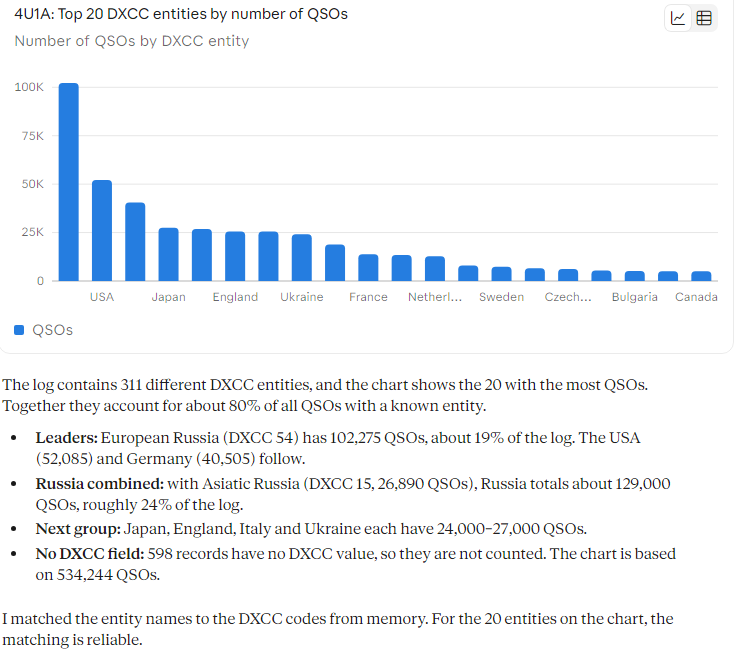
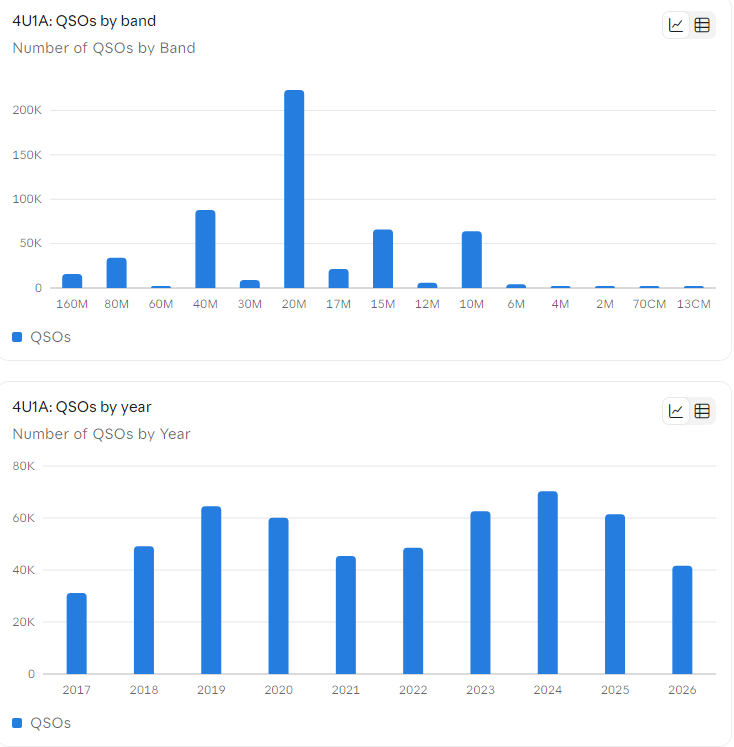
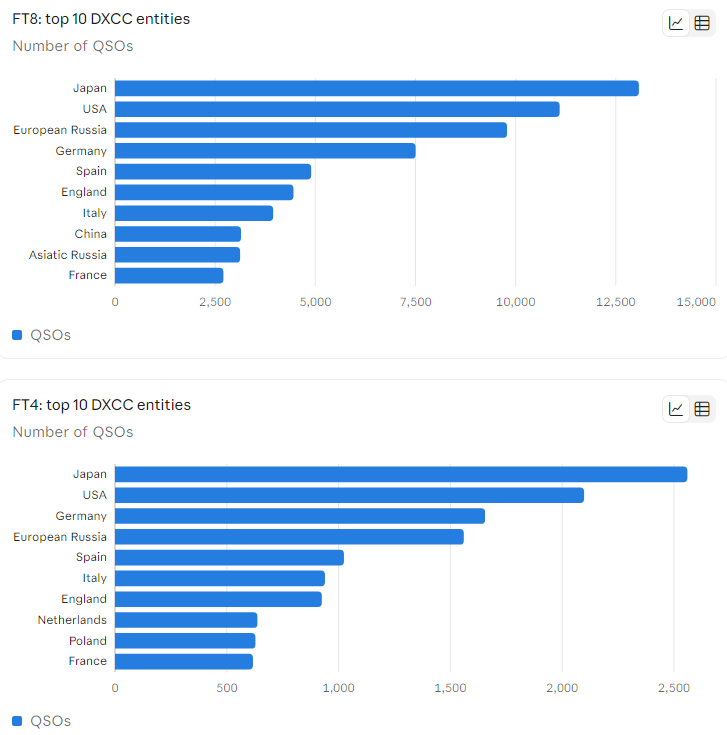
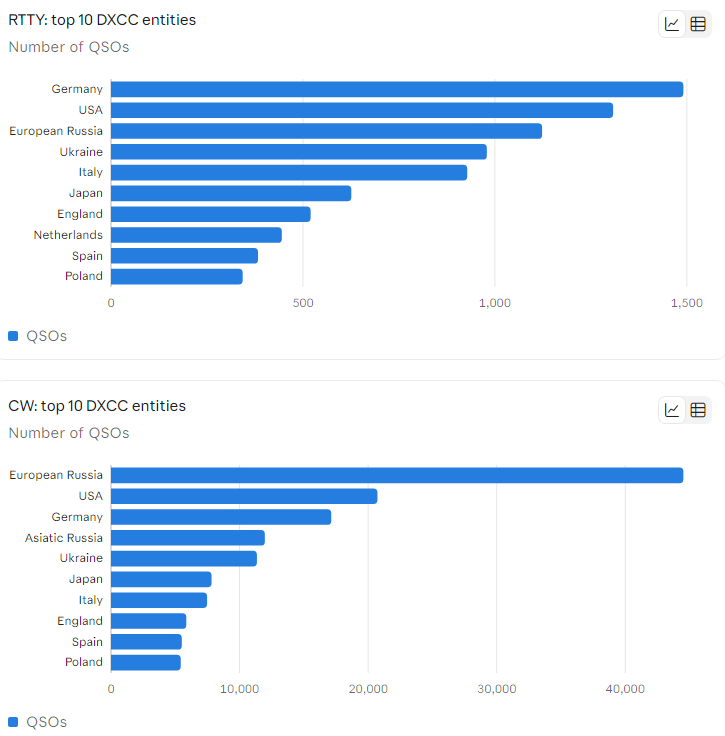
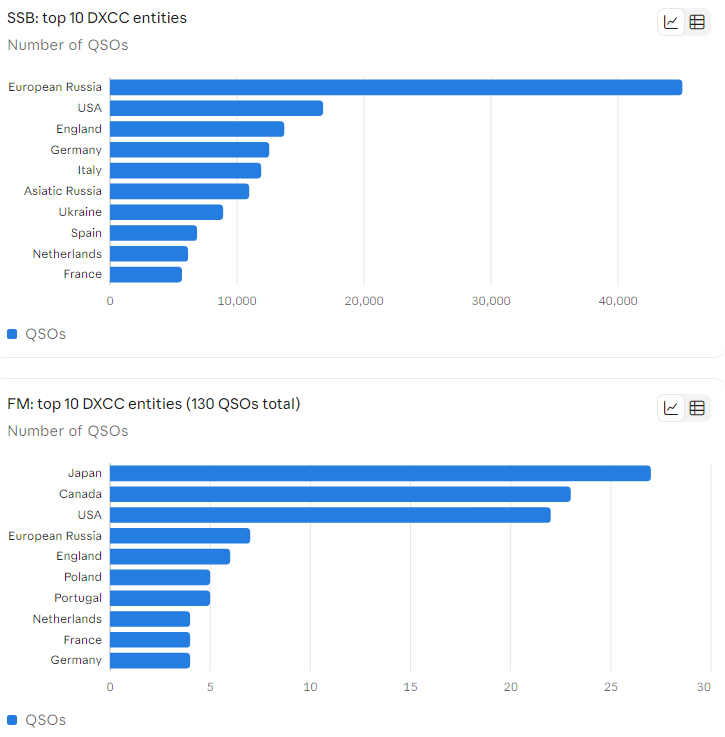
Above are the band chart, the year chart and a top-10 DXCC chart for each of the six modes.
By band
- 20M dominates with 223,203 QSOs, about 42% of the log.
- 40M (88,027), 15M (65,890) and 10M (64,032) come next.
- The VHF/UHF/microwave bands have very few QSOs: 6M (4,323), 13CM (1,382), 70CM (292), 4M (204) and 2M (88).
By year
- Activity grew from 31,179 QSOs in 2017 to a peak of 70,312 in 2024.
- 2021 had a dip to 45,402 QSOs, followed by a recovery in 2023.
- 2026 has 41,590 QSOs so far, and the year is not over.
By mode, top entities
- FT8 and FT4: Japan is first in both (13,075 and 2,560), followed by the USA. European Russia is third in FT8 and fourth in FT4.
- CW and SSB: European Russia leads by a wide margin (44,520 in CW, 45,060 in SSB), then the USA. England is third in SSB (13,719) but only eighth in CW.
- RTTY: Germany is first (1,491), ahead of the USA (1,308) and European Russia (1,123). Ukraine is fourth with 979.
- FM: the sample is tiny (130 QSOs), led by Japan (27), Canada (23) and the USA (22).
The entity names are matched from DXCC codes from memory. The most uncertain is Portugal in the FM chart, which has only 5 QSOs.